How Persians Celebrate Yalda Night: Food, Family, and Ancient Traditions
Yalda Night is one of the most meaningful and visually beautiful celebrations in Persian culture. Observed on the longest night of the year—the winter solstice—this ancient festival is a celebration of light over darkness, family togetherness, and symbolic seasonal foods.
For American audiences interested in global cuisine and cultural traditions, Yalda Night offers a unique story where food, history, and human connection come together. From vibrant red fruits to warm family gatherings, Yalda is both timeless and deeply relevant today.
This complete guide explores the history of Yalda, its traditional and modern customs, the symbolism behind Yalda foods, and how families celebrate this night together—making it perfect for readers discovering Persian culture through food.
What Is Yalda Night?
Yalda Night (also known as Shab-e Yalda) marks the longest night of the year, usually falling on December 20 or 21. It represents the transition from darkness to light, as the days begin to grow longer after the winter solstice.
In Persian culture, this night symbolizes:
Hope after hardship
Renewal and rebirth
The victory of light over darkness
Families gather after sunset and stay awake late into the night, welcoming the return of longer days with food, stories, and shared traditions.
The Ancient History of Yalda Night
Yalda Night dates back more than 3,000 years, rooted in ancient Persian and pre-Islamic traditions. The word Yalda comes from a Syriac term meaning “birth”, referring to the rebirth of the sun.
Ancient Persians believed that darkness was strongest on this night, and that staying awake together would protect people from negative forces. With sunrise came light, balance, and renewed energy for the year ahead.
This deep connection to nature and astronomy makes Yalda one of the oldest continuously celebrated seasonal festivals in the world.
Why Yalda Night Is Still Celebrated Today
Despite its ancient origins, Yalda remains incredibly relevant. In today’s fast-paced world, the holiday emphasizes:
Slowing down
Connecting with loved ones
Honoring seasonal foods
Finding warmth during winter
For Persian families in Iran and abroad—including the United States—Yalda is a cherished cultural anchor that blends history with modern life.
Family Gatherings: The Heart of Yalda Night
At its core, Yalda Night is about family togetherness.
Traditionally:
Families gather at the home of elders
Multiple generations sit around one table
Conversations, laughter, and memories are shared
In modern homes, especially in the U.S., Yalda may be celebrated with smaller gatherings, but the spirit remains the same: connection, warmth, and presence.
Staying up late together symbolizes patience through darkness and optimism for brighter days ahead.
Traditional Yalda Night Customs
1. Staying Awake Until Midnight
Remaining awake honors the belief that witnessing the end of the longest night welcomes light and positivity.
2. Storytelling and Poetry
Storytelling strengthens family bonds, while poetry represents wisdom, love, and continuity. This tradition adds emotional depth to the night.
3. Decorating the Yalda Table
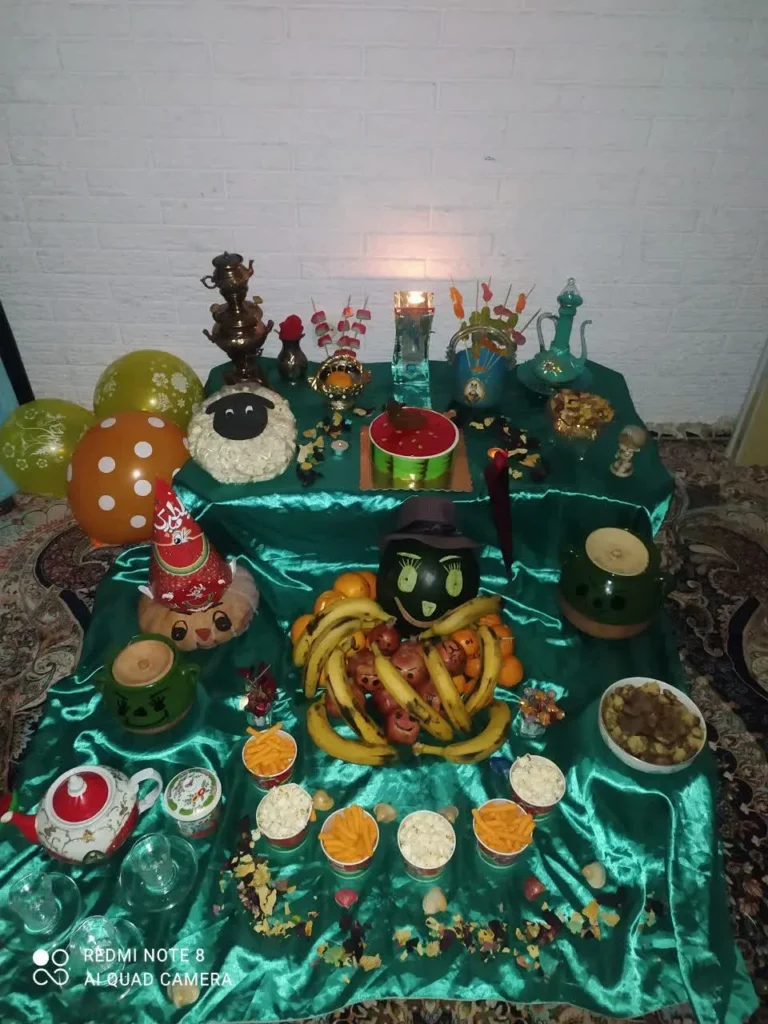
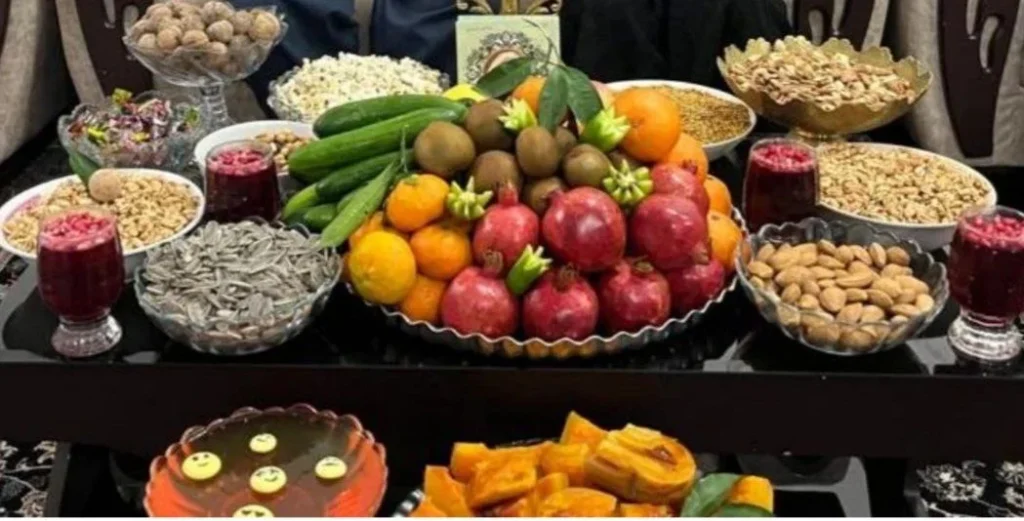
The Yalda table is filled with red and warm-toned foods, candles, and seasonal fruits—creating a visually stunning and symbolic display.
Symbolic Foods of Yalda Night and Their Meanings
Food is the centerpiece of Yalda Night, and every item on the table carries meaning.
🍉 Watermelon
Symbolism: Health and protection
Ancient Persians believed eating watermelon on Yalda would protect against illness during winter.
🍎 Apples
Symbolism: Beauty, balance, and vitality
Apples represent harmony and well-being.
🍊 Oranges & Persimmons
Symbolism: Sunlight and warmth
Their bright color reflects the sun’s return after the solstice.
The Powerful Symbolism of Pomegranates
Pomegranates are the most iconic Yalda fruit.
What pomegranates symbolize:
Life and rebirth
Fertility and abundance
The rising sun
Their deep red color represents warmth and vitality, while their many seeds symbolize unity and prosperity. Pomegranates are eaten fresh, juiced, or used as decoration.
Nuts and Dried Fruits: Symbols of Endurance
Common Yalda nuts include:
Pistachios
Walnuts
Almonds
Hazelnuts
Symbolism: Strength, prosperity, and endurance
Dried fruits such as figs, raisins, and dates reflect preparation and survival during winter—values deeply respected in Persian culture.
Traditional Yalda Sweets
Historically, Yalda sweets were simple and natural:
Dried fruits
Nut mixtures
Light homemade treats
Sweet flavors symbolized joy and hope, offering balance to the darkness of winter.
Modern Yalda Desserts: A Creative Evolution
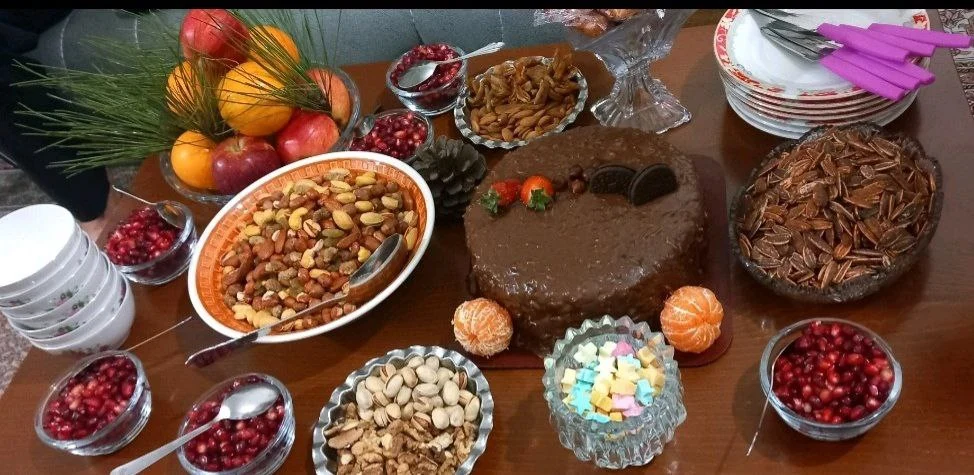
Today, especially among Persian families in the United States, Yalda desserts have evolved to include modern and Western-inspired treats—while keeping traditional symbolism alive.
🍰 Red and Green Cakes
Red symbolizes light, pomegranate, and warmth
Green represents life and renewal
Popular options include red velvet cake, pistachio cake, and layered celebration cakes.
🍮 Gelatin Desserts (Jello-Style)
Layered red and green gelatin cups are popular modern additions—easy to make, festive, and family-friendly.
🍫 Chocolates with Pomegranate and Pistachio
Modern Yalda tables often feature:
Chocolate truffles with pomegranate filling
Pistachio-coated chocolates
Chocolate bark with dried fruits and nuts
These desserts blend Persian flavors with American dessert culture.
Yalda Night in Modern American Homes
For Americans discovering Yalda, the celebration is accessible and adaptable:
A fruit and dessert table
Candles for warmth and symbolism
Shared stories or reflections
Staying up late with loved ones
Yalda’s themes—light, family, and food—resonate universally.
Why Yalda Night Appeals to American Audiences
Yalda Night aligns beautifully with American interests in:
Seasonal celebrations
Cultural food traditions
Cozy winter gatherings
Meaningful holidays centered around family
As global cuisine and cultural storytelling grow in popularity, Yalda offers a fresh yet timeless experience.
Yalda Night: More Than a Holiday
Yalda Night is not just a celebration—it’s a reminder that light always follows darkness, and that food has the power to bring people together across generations and cultures.
Through symbolic fruits, evolving desserts, and heartfelt family gatherings, Yalda continues to shine as one of the most beautiful traditions in Persian culture.
For food lovers, cultural explorers, and home cooks alike, Yalda Night is an invitation to slow down, gather close, and celebrate warmth in the heart of winter.